

Common Video Translation Mistakes (and How to Avoid Them)
January 12, 2025 4 mins read
Poor video translation doesn't just fail to communicate; it damages your brand's credibility. Learn about the most common mistakes creators make—from literal translations to bad lip sync—and how AI tools like VideoDubber help you avoid them.
Expanding your video content to a global audience is one of the smartest moves you can make as a creator or business. However, simply flipping a switch to "translate" can often lead to results that range from confusing to downright embarrassing.
Poor video translation doesn't just fail to communicate; it damages your brand's credibility. In this post, we’ll explore the most frequent pitfalls creators stumble into and how AI tools like VideoDubber are rewriting the rules to help you avoid them.
One of the most comical yet damaging mistakes is translating word-for-word without considering context. Languages are complex webs of idioms, metaphors, and cultural references that rarely survive a direct trip through a basic dictionary.
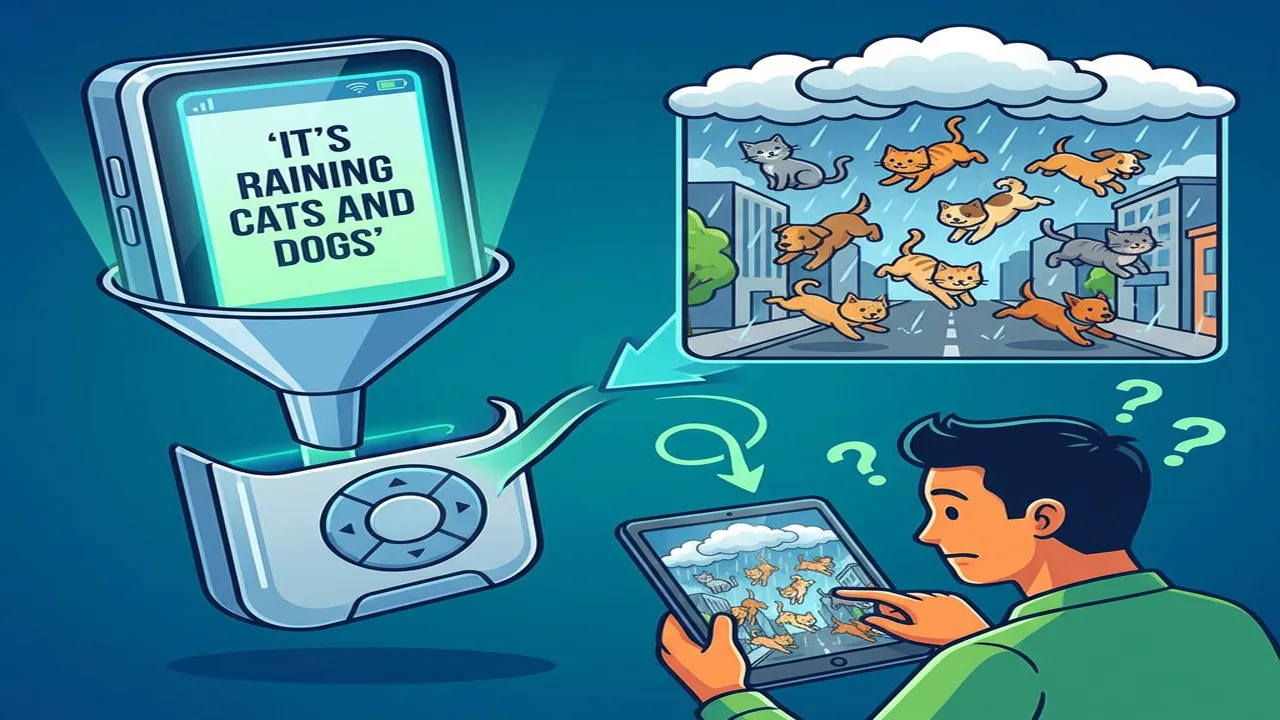
Literal Translation Failure
Translating expressions like "It's a piece of cake" directly into another language often results in a sentence about pastry rather than ease. Viewers are left confused, and the natural flow of your narrative is broken.
Use Context-Aware AI. Modern tools don't just swap words; they analyze whole sentences and paragraphs to understand the meaning. They translate the sentiment—replacing an English idiom with a culturally appropriate equivalent in Spanish or French, ensuring your joke lands and your point is made.
We’ve all seen those old martial arts movies where the mouth moves for three seconds after the dialogue stops. In the age of high-definition content, this "dubbing drift" makes your video look unprofessional and distracts the viewer from your message.
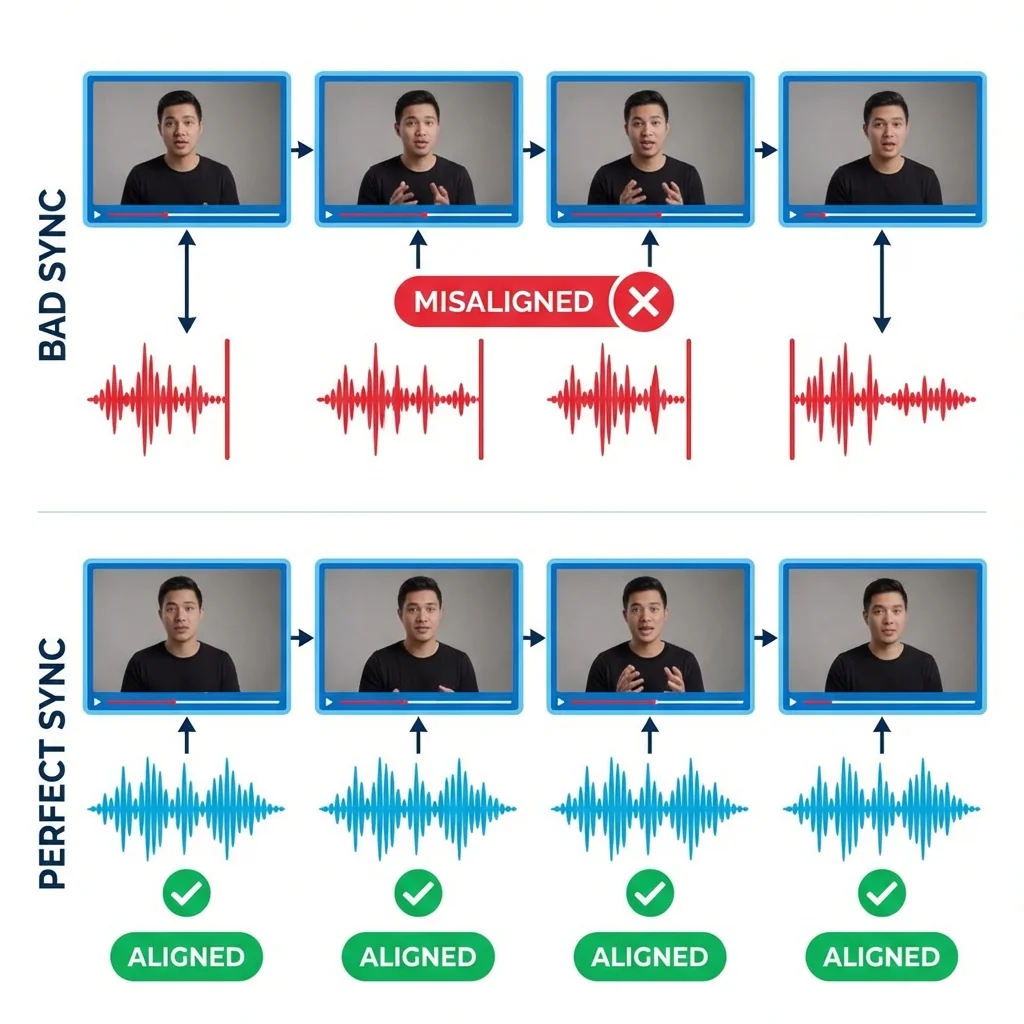
Bad vs Perfect Sync
Traditional dubbing simply overlays new audio on top of old video. Since different languages take different amounts of time to speak the same sentence (German is often 30% longer than English!), the audio and video quickly fall out of sync.
AI Dubbing with Lip-Sync Technology. VideoDubber doesn't just generating audio; it can actually adjust the video itself. It subtly modifies the speaker's lip movements to match the new language, creating a seamless visual experience where it looks like you were natively speaking Japanese or Portuguese.
Nothing screams "low quality" faster than a flat, monotone, robotic voice narrating a heartfelt or exciting video.
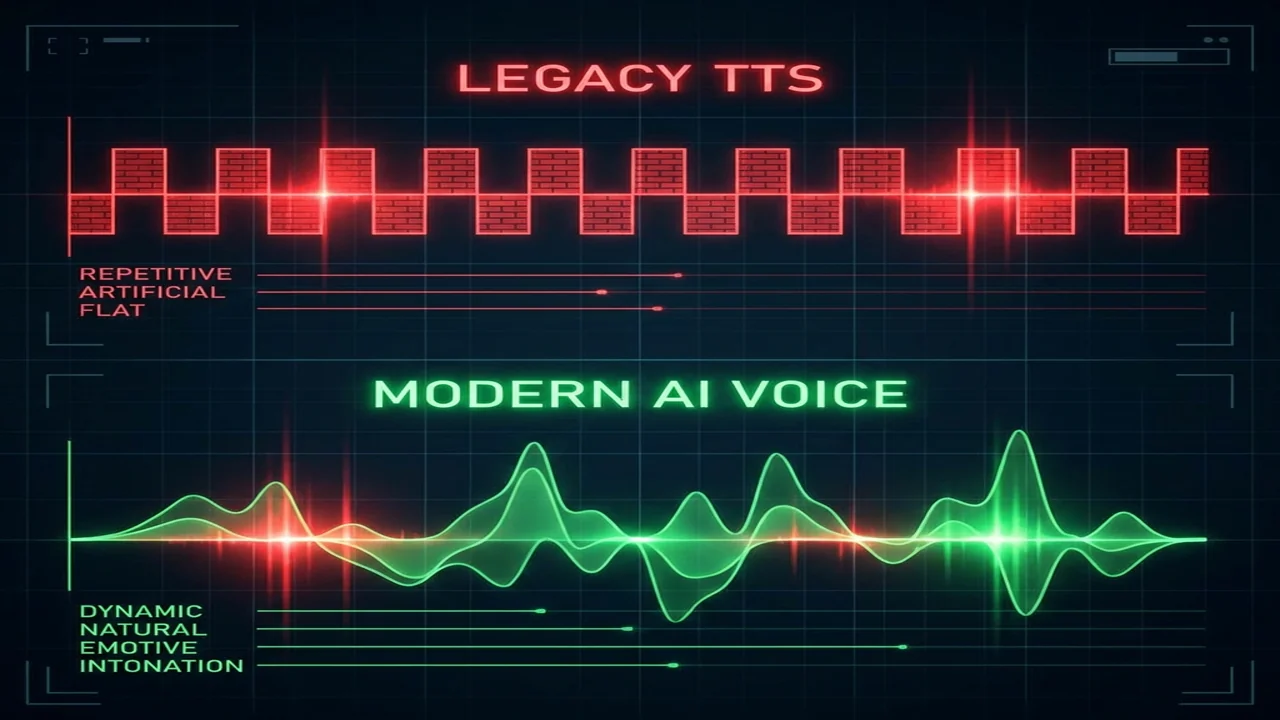
Robotic vs Natural Voice Waveform
Using cheap Text-to-Speech (TTS) engines that strip away all emotion, pacing, and intonation. If you sound bored or artificial, your audience will tune out instantly.
Voice Cloning. Instead of using a generic stock voice, advanced AI can analyze your original audio to capture your unique vocal print. It generates the translation in your voice, preserving your excitement, your pauses, and your personality.
Translation is linguistic; localization is cultural. A thumbs-up might be a sign of approval in the US, but it's offensive in parts of the Middle East.
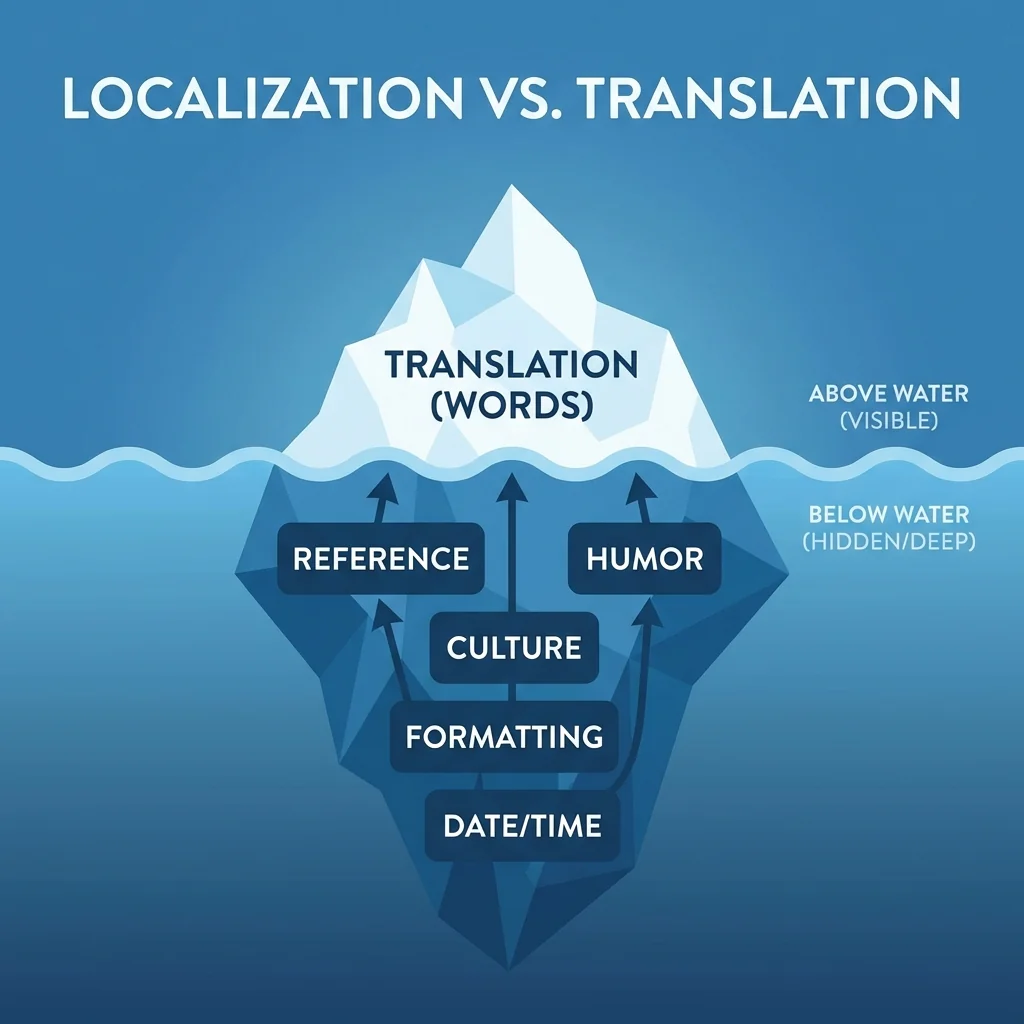
Localization vs Translation Iceberg
Translating the words but ignoring the visuals or references that might not land (or might offend) in a different culture.
Review and Edit. While AI handles the heavy lifting, platforms with an interactive editor give you the final say. You can tweak translations to be more culturally sensitive or adjust the script to swap out references that won't make sense to your new audience.
Avoiding these mistakes used to require a team of translators, editors, and voice actors. Now, it just requires the right tool.
VideoDubber is built to solve these exact problems:
Don't let bad translation ruin your global debut. Start dubbing the right way with VideoDubber and ensure your message is heard, understood, and appreciated in every language.

With a background in AI and a passion for clear technical communication, I enjoy breaking down complex tools and processes. Exploring new software and sharing insights is a key focus.