

Manual vs AI Video Translation: Cost, Speed, Quality Comparison (2026)
January 11, 2026 5 mins read
In the rapidly evolving world of content creation, reaching a global audience is no longer a luxury—it's a necessity. Major creators like MrBeast have proven that the key to exponential growth lies in localization. MrBeast's dubbed channels and audio tracks have generated millions of extra views, demonstrating that your next 10 million subscribers might not speak your language.
But how do you bridge this language gap? For years, Manual Translation (hiring agencies, translators, and voice actors) was the only way. Now, AI Video Translation tools like VideoDubber.ai have revolutionized the process, offering a faster, more affordable alternative.
This guide compares Manual vs. AI Video Translation across key metrics: Cost, Speed, and Quality, helping you decide which is right for your video strategy.
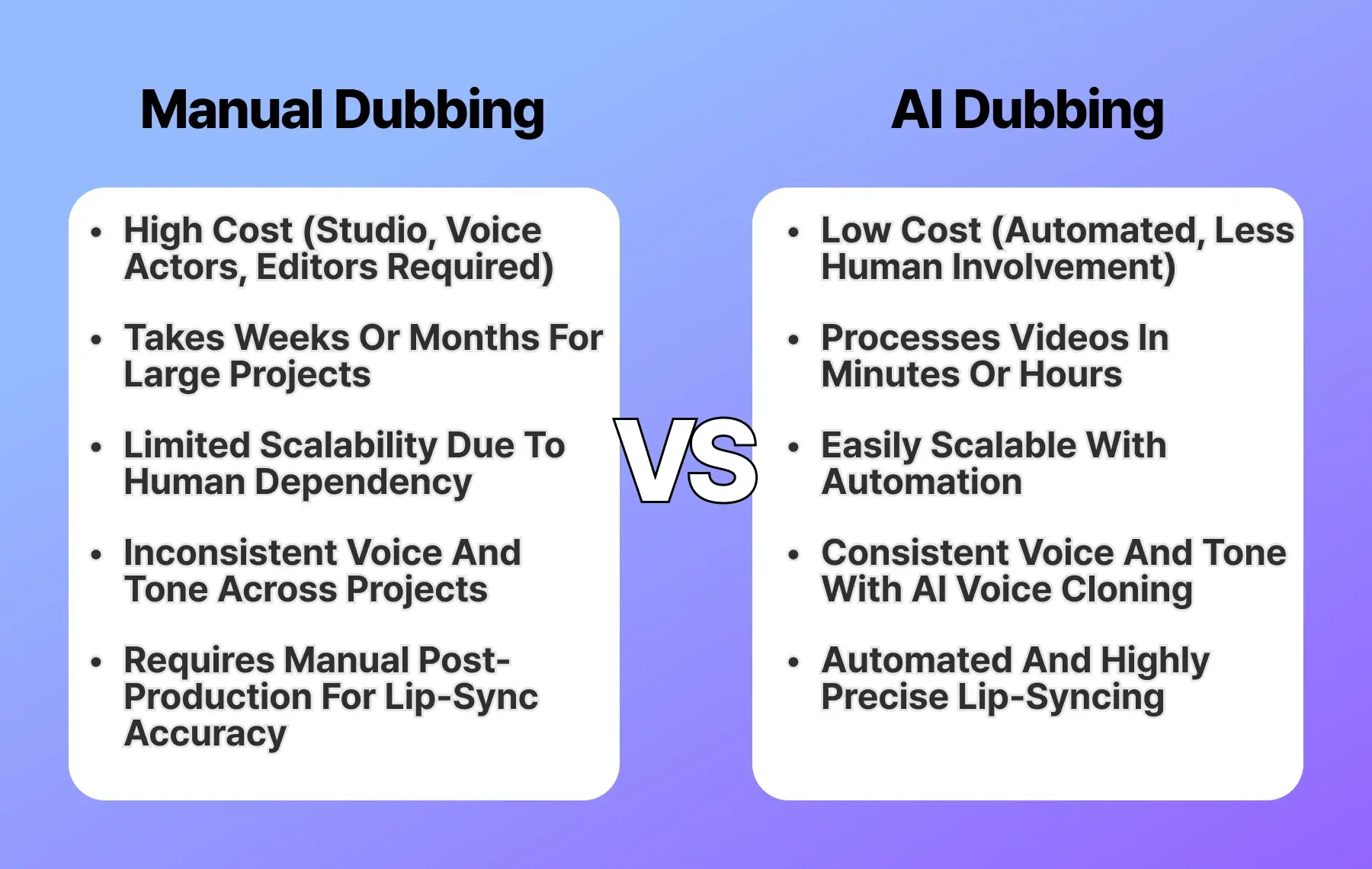
Manual vs AI Video Translation Comparison
The most immediate difference between the two methods is the price tag.
Manual dubbing is an expensive, labor-intensive process. You pay for:
Estimated Cost: $20 - $180+ per minute of video.
A typical 10-minute YouTube video could easily cost $200 to $1,800+ to translate into just one language. For a creator wanting to launch in 5 languages (Spanish, Hindi, Portuguese, etc.), the budget would exceed $5,000 per video.
AI eliminates the need for a large team by automating the entire pipeline.
Estimated Cost: $0.09 per minute (with VideoDubber).
That same 10-minute video costs just $0.90 to translate. This massive reduction (over 100x cheaper) enables you to scale to 10 or 20 languages for the price of a fancy coffee.
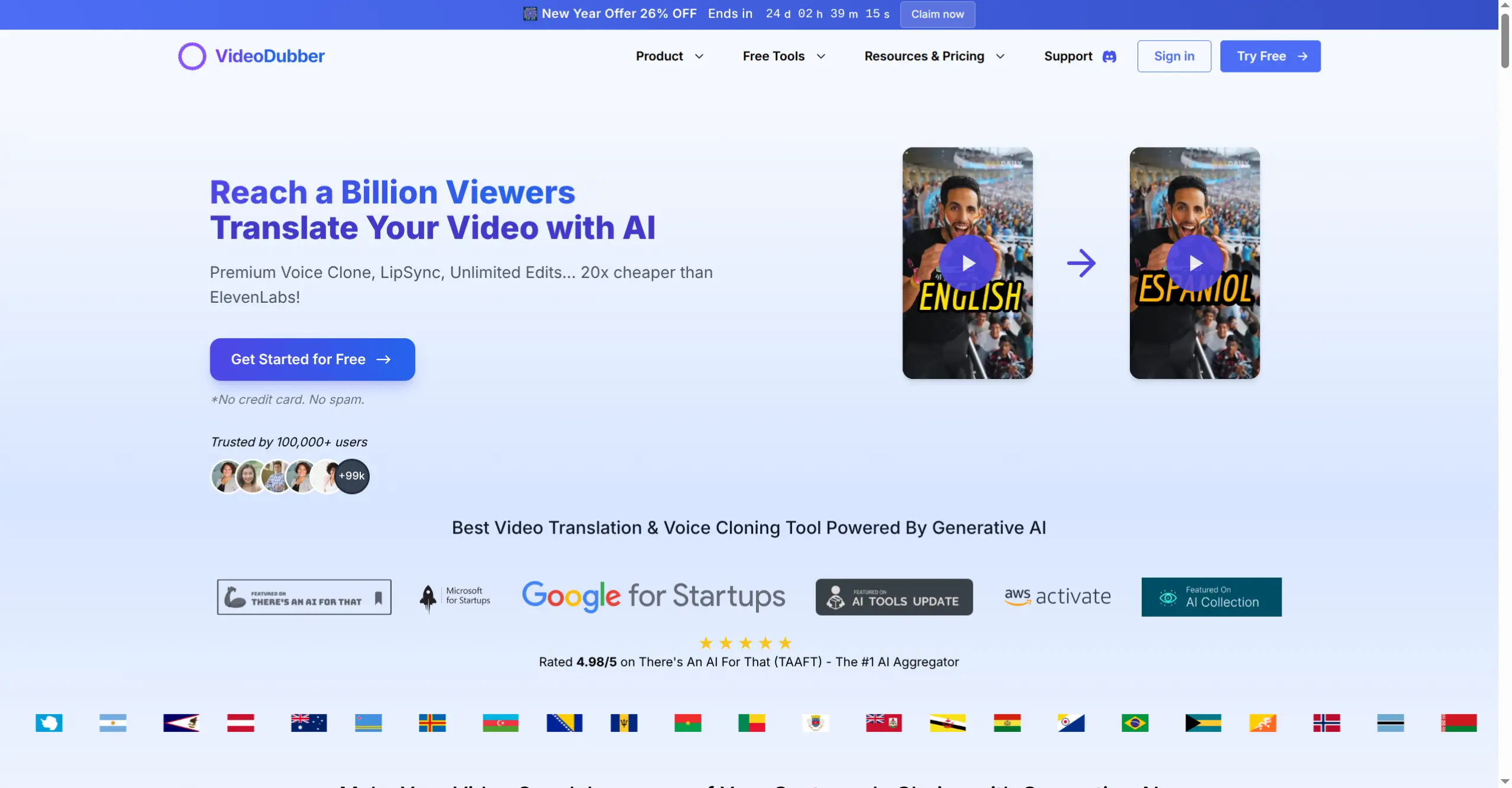
VideoDubber Interface
In the viral world of social media, speed is everything.
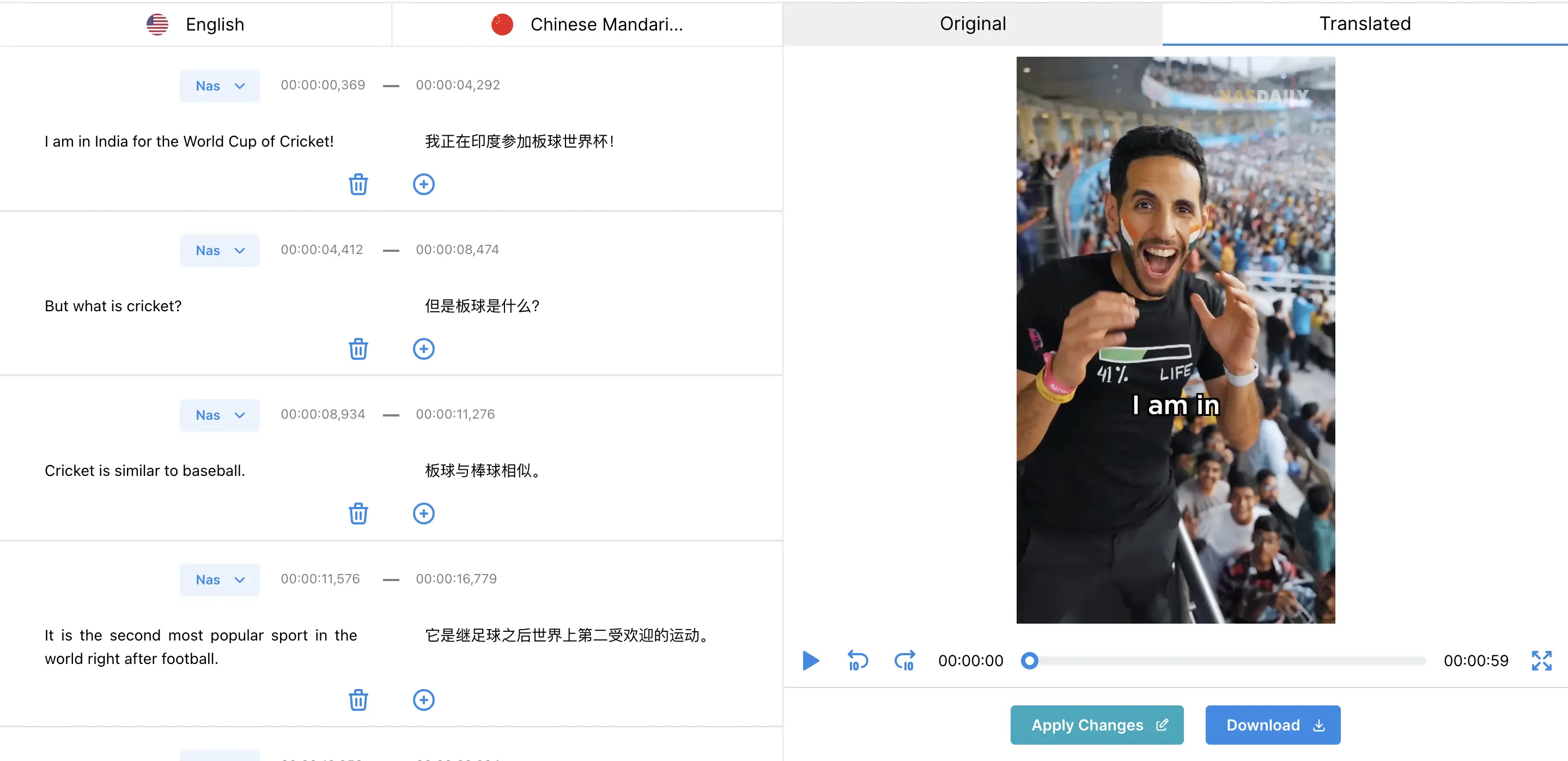
AI Video Translation Speed
Historically, manual dubbing held the advantage in emotion and nuance. However, modern AI has closed the gap significantly.

Manual vs AI Quality
What happens if you find a mistake or want to change a specific phrase?
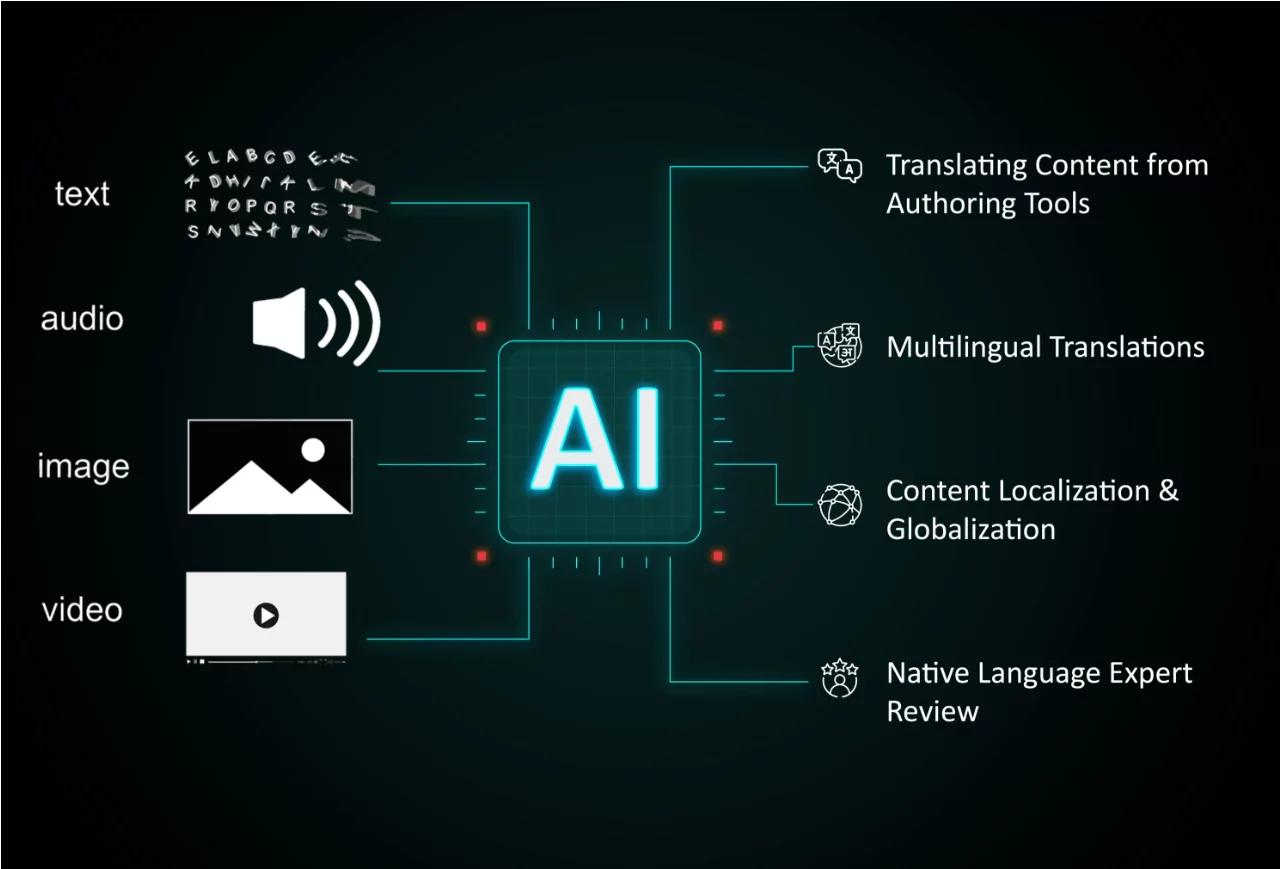
AI vs Manual Comparison Chart
| Feature | Manual Translation | AI Video Translation (VideoDubber) |
|---|---|---|
| Cost | $20 - $180+ / min | $0.09 / min |
| Turnaround | Days or Weeks | Minutes |
| Voice | Different Actor | Voice Cloning (Your Voice) |
| Edits | Expensive Re-recording | Free & Instant |
| Scalability | Hard to scale | Translate to 150+ languages instantly |
For Hollywood movies requiring dramatic acting, manual dubbing still has a place. But for YouTubers, Educators, Marketers, and Businesses, AI Video Translation is the clear winner. It offers 95% of the quality at <1% of the cost and 100x the speed.
Real World Example: Educational platforms and creators are reporting savings of thousands of dollars per month while growing their audience by 200% simply by enabling Spanish and Hindi dubbed tracks using AI.
Ready to go global? Try VideoDubber for free and start speaking to the world in your own voice.
Learn what video translation and AI dubbing are, how they work, and why VideoDubber.ai is the best solution for translating videos while preserving voice, tone, and emotion. Complete guide covering benefits, use cases, and best practices.
Discover the best video translation tools in 2026. Compare VideoDubber.ai, CAMB.AI, HeyGen, Synthesia, and more. Features, pricing, pros and cons, and detailed comparisons to help you choose the right tool.
Learn how to translate videos into 150+ languages using VideoDubber.ai. Complete step-by-step guide with voice cloning, lip-sync, and professional-quality dubbing.
Learn how AI voice cloning works for video dubbing. This comprehensive guide covers neural networks, voice encoding, TTS synthesis, leading platforms, best practices, and the technology behind creating natural-sounding dubbed content.
Explore the best SRT translators for video translation in 2024. Discover tools that help convert subtitles into multiple languages and learn how video dubbing solutions can elevate your content for global audiences.