

Video Localization vs. Translation vs. Dubbing: What’s the Difference?
January 14, 2025 3 mins read
When taking your video content global, you’ll encounter three common terms: Translation, Dubbing, and Localization. While often used interchangeably, they represent distinct processes with different goals and outcomes.
Understanding these differences is key to choosing the right strategy for your audience and budget.
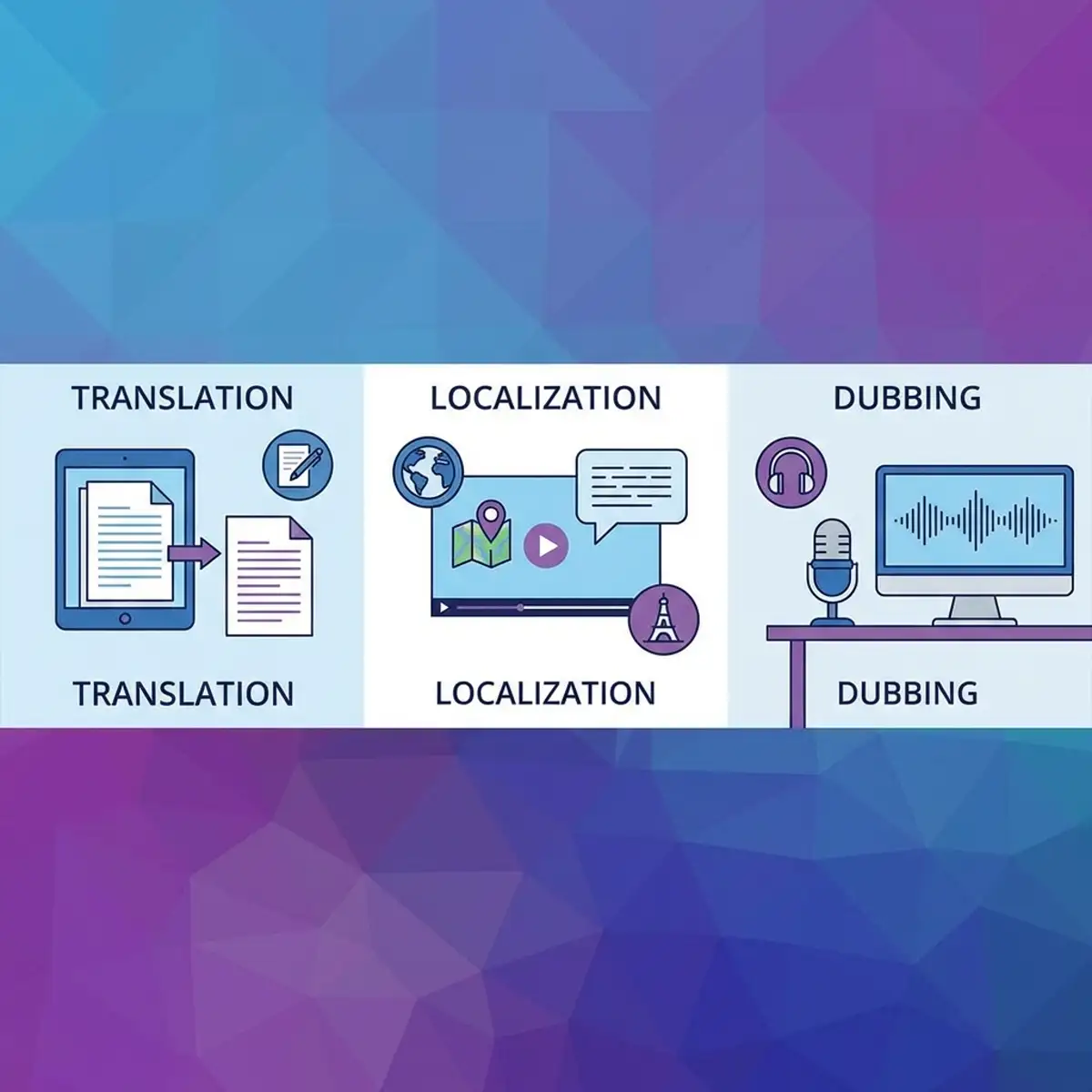
Video Localization vs Translation vs Dubbing
Video Translation is the process of converting the spoken or written text in your video from one language to another. It focuses primarily on the linguistic aspect—ensuring the words mean the same thing in the target language.
Video Dubbing (or Voiceover) takes translation a step further by replacing the original audio track with a new one in the target language.
Video Localization is the most comprehensive approach. It adapts the entire video experience to feel native to the target culture. This includes not just language, but also cultural references, visuals, currencies, dates, and even humor.
| Feature | Translation | Dubbing | Localization |
|---|---|---|---|
| Focus | Text/Language | Audio/Voice | Culture/Experience |
| Output | Subtitles/Captions | New Audio Track | Adapted Video & Audio |
| Cost | Low | Medium | High |
| Immersion | Low | High | Very High |
For most content creators and businesses, AI Dubbing offers the perfect middle ground—providing the immersion of dubbing with the speed and cost-efficiency of translation. Tools like VideoDubber allow you to translate, dub, and even clone voices to maintain consistency across languages.
Ready to start? upload your video to VideoDubber today and experience the difference between simple text translation and full voice dubbing.
The ultimate showdown: Google Gemini vs. DeepSeek vs. OpenAI GPT. We compare their translation accuracy for text, conversation, and video.
Compare Cost, Speed, and Quality of Manual vs AI Video Translation. Discover why AI dubbing with Voice Cloning is the best choice for creators in 2026.
How to use GPT-5.2 for video translation: step-by-step in VideoDubber, model comparison (GPT vs Gemini vs DeepSeek), cost and credits, best practices for European languages. Try free.
How to use Gemini for video translation: complete 2026 guide. Step-by-step in VideoDubber, Asian-language strength (Japanese, Korean, Hindi), multimodal context, and when to pick Gemini vs GPT or DeepSeek.
Discover the accuracy of AI video translation with Word Error Rate (WER) benchmarks and real-world examples from VideoDubber.