

Video Translation for Online Courses: A Complete Playbook
January 20, 2026 3 mins read
title: "Video Translation for Online Courses: A Complete Playbook"
slug: "video-translation-for-online-courses-playbook"
date: "2026-01-20"
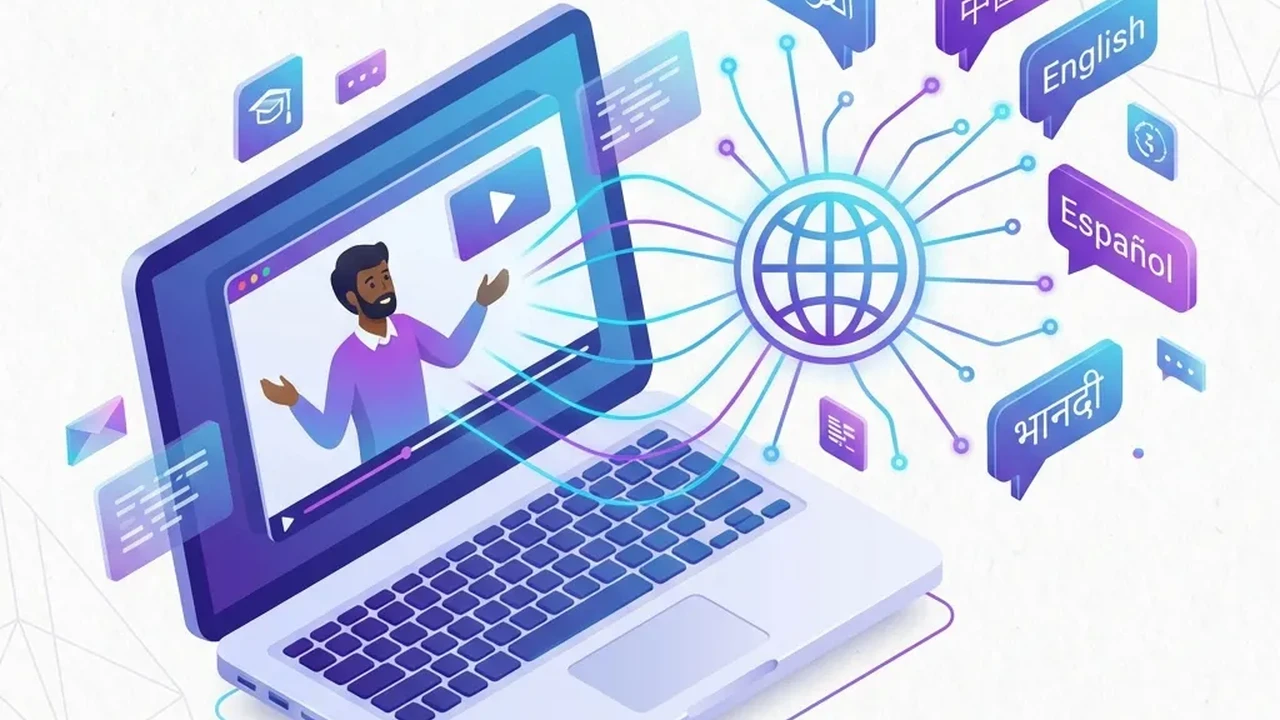
Video Translation for Online Courses
The e-learning market is exploding. By 2026, it's projected to reach over $375 billion. But here is the catch: transcending the English-speaking market is where the real growth lies.
If your courses are only in English, you are ignoring over 80% of the global population.
Translating your online courses isn't just about subtitles anymore. It's about AI video dubbing, voice cloning, and lip-syncing that makes your content feel native in Spanish, Hindi, Arabic, or Mandarin.
In this playbook, we will cover everything you need to know about scaling your online course business through video translation.
Before we dive into the how, let's look at the why.
Creating a course takes hundreds of hours. Translating it takes a fraction of that time but doubles or triples your potential addressable market (TAM).
Students learn better in their native language. Subtitles are great, but they are a distraction. Audio dubbing ensures your students are watching the visual concepts, not reading text at the bottom of the screen.
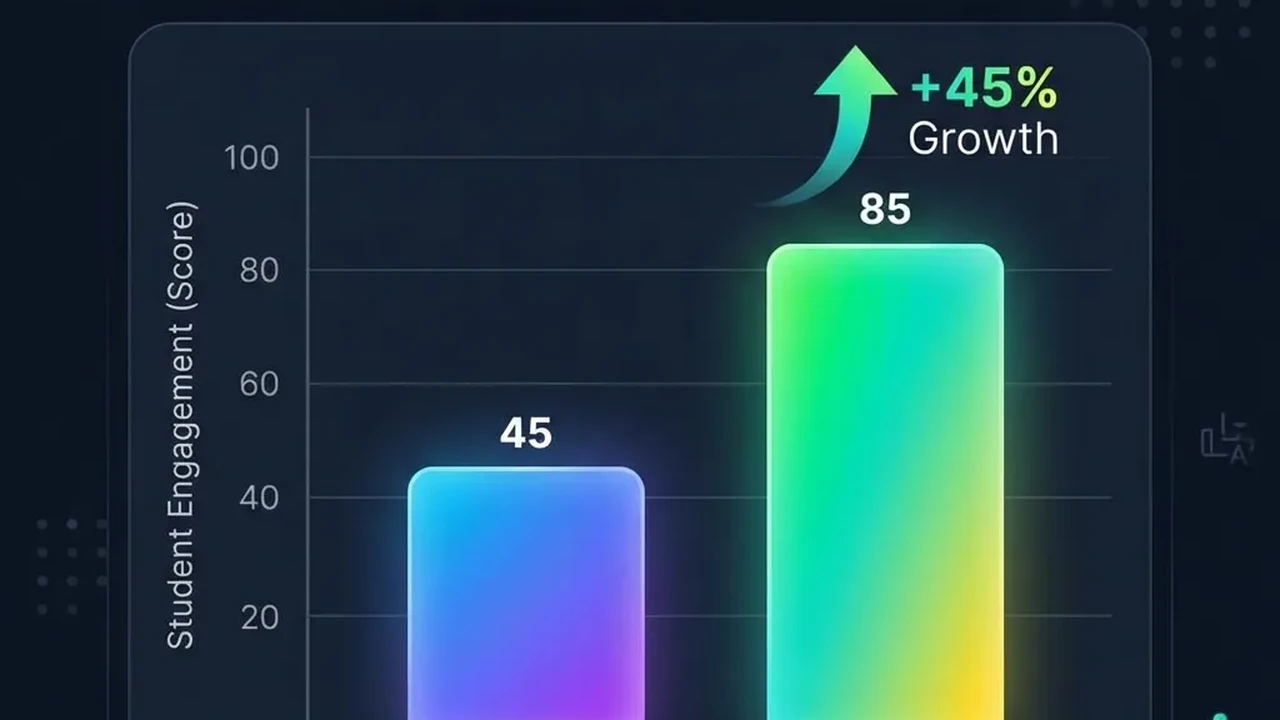
Student Engagement Growth Chart
YouTube and Google rank localized content higher in local search results. A video titled Computed properties in Vue.js will struggle to rank in Brazil, but Propriedades computadas em Vue.js faces much less competition.
| Feature | Manual Dubbing (Agencies) | AI Video Translation (VideoDubber) |
|---|---|---|
| Cost | $50 - $200 per minute | Fraction of the cost |
| Turnaround | Weeks or Months | Minutes |
| Voice Consistency | Different actor voice | Voice Cloning (Keeps your voice) |
| Scalability | Hard to scale | Unlimited scale |
Here is how you can use VideoDubber to translate an entire course in minutes.
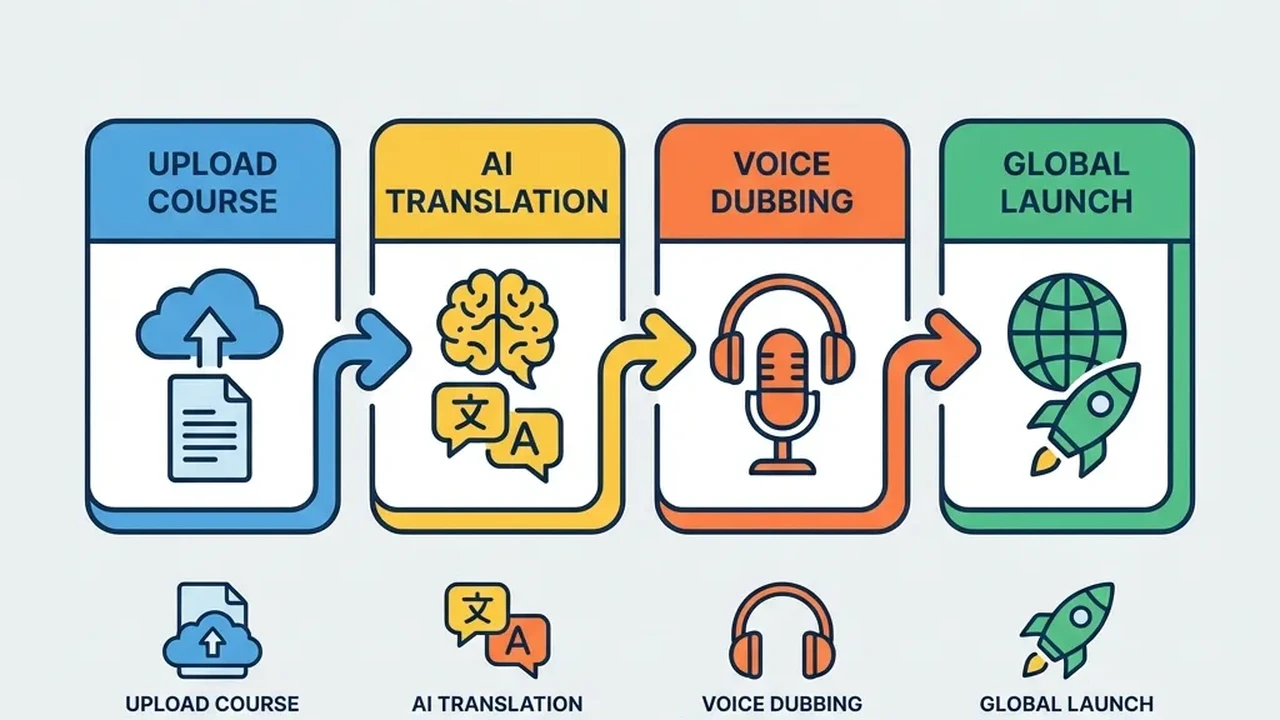
Course Translation Workflow
VideoDubber supports MP4, MOV, and also allows you to import directly from YouTube or Google Drive.
Select from over 30+ languages. If you are targeting South America, choose Spanish and Portuguese. For Asia, Hindi and Mandarin are top choices.
This is crucial for personal branding. You want the instructor (you) to sound like you, even when speaking Japanese. Toggle "Voice Clone" to On.
AI is 98% accurate, but context matters. Use the VideoDubber editor to tweak translations for technical jargon (e.g., ensuring "React" isn't translated to the verb "react").
Export your videos and host them on Teachable, Udemy, Thinkific, or YouTube with multi-language audio tracks.
The next big "guru" in your niche might be you—but only if you go global. The barrier to entry for translation has never been lower.
Ready to launch your global academy?
Start translating for free with VideoDubber
Understand the key differences between video localization, translation, and dubbing. Learn which strategy is best for your global content goals.
How to use GPT-5.2 for video translation: step-by-step in VideoDubber, model comparison (GPT vs Gemini vs DeepSeek), cost and credits, best practices for European languages. Try free.
How to use Gemini for video translation: complete 2026 guide. Step-by-step in VideoDubber, Asian-language strength (Japanese, Korean, Hindi), multimodal context, and when to pick Gemini vs GPT or DeepSeek.
Discover the accuracy of AI video translation with Word Error Rate (WER) benchmarks and real-world examples from VideoDubber.
The ultimate showdown: Google Gemini vs. DeepSeek vs. OpenAI GPT. We compare their translation accuracy for text, conversation, and video.